A Tapestry of Timeless Realms: The Enduring Allure of Infinitely Replayable RPGs
Explore the best replayable RPGs and discover immersive role-playing games with endless choices and unforgettable worlds for every gamer.
In the quiet, reflective moments of 2026, a particular breed of gamer seeks not merely an escape, but a home—a digital sanctuary woven from choice, consequence, and character. These are the players who return, year after year, to worlds that refuse to be exhausted, to stories that promise a new shade of meaning with every telling. The hunt is not for fleeting distractions but for experiences with a soul, for role-playing games that offer not just a conclusion, but a continuum. The distinction is profound; while many RPGs present a linear path to a final curtain call, a select few possess a magic that whispers of infinite returns, their narratives and worlds unfolding like a labyrinth with ever-shifting walls, beckoning the player to get lost within them once more.
10. Tyranny: The Architect's Burden
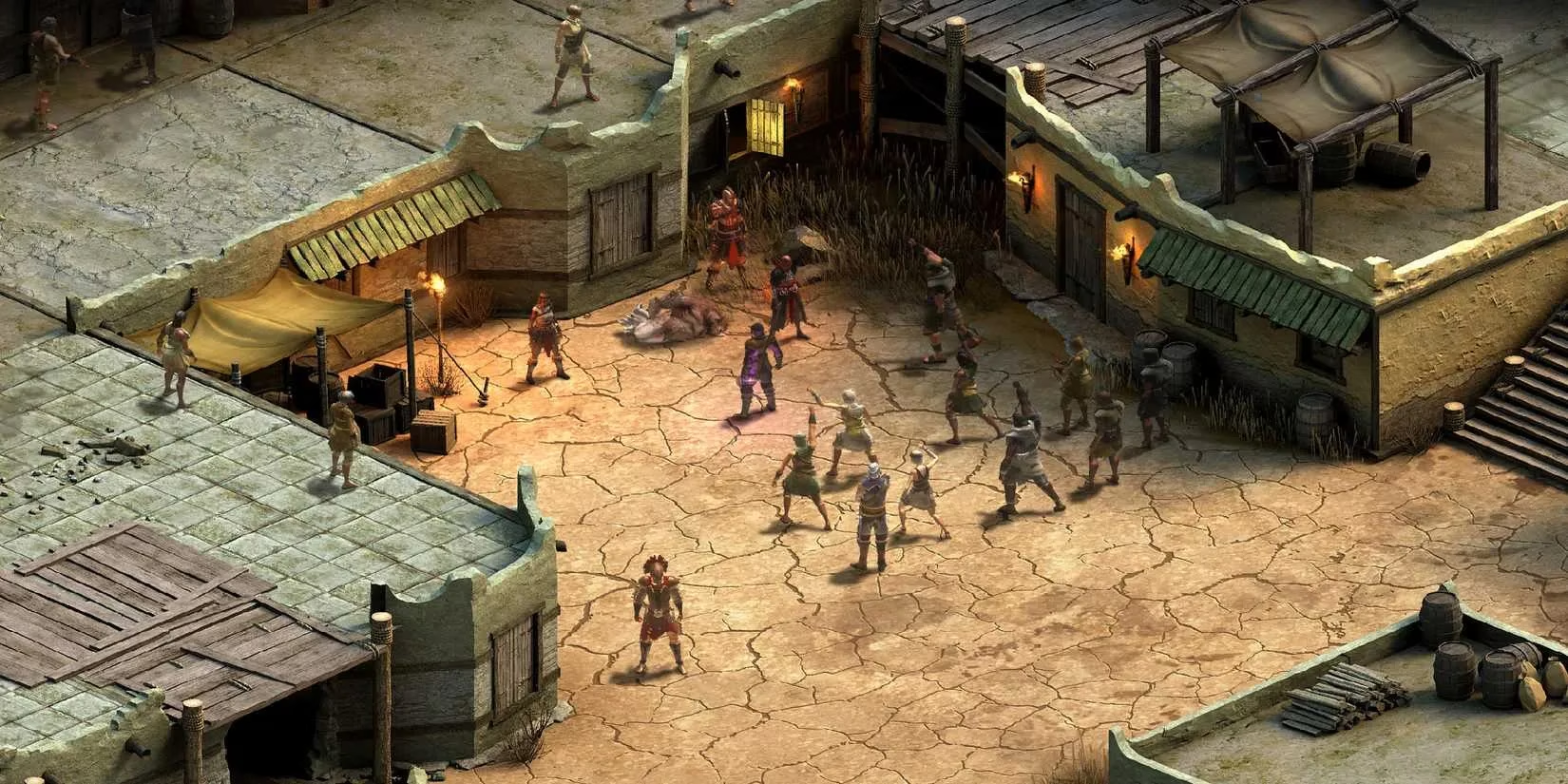
In the realm of isometric strategy and moral compromise, Tyranny stands as a masterclass in consequential power. The journey from a mere enforcer of a tyrannical Overlord to potentially becoming the ultimate architect of that very tyranny is paved with agonizing decisions. Its replayability is not a feature but a philosophy, embedded in the game's very structure through distinct "Paths." Players can align with one of the warring factions vying for dominance, or, in a bold stroke of defiant anarchy, choose to betray them all and seize power for themselves. This Anarchy Path is a brutal, isolating climb, yet even within its ruthless confines, a multitude of micro-choices ripple outward, ensuring no two ascents to the throne feel identical. The game is a tapestry of political intrigue where every dialogue choice, every spared or condemned life, alters the fabric of the world, compelling multiple journeys just to witness the full spectrum of one's own potential for despotism or, perhaps, a twisted form of order.
9. The Witcher 3: Wild Hunt: The Melancholy of the Path
Some worlds are not replayed for branching narratives, but for the sheer, palpable melancholy of inhabiting them. The Witcher 3: Wild Hunt is such a place. As Geralt of Rivia, the monster-slayer with a heart buried under layers of grime and cynicism, players traverse the war-torn, breathtaking vistas of Velen, the bustling, corrupt metropolis of Novigrad, and the serene, deceptive simplicity of White Orchard. While key romance and plot decisions offer variance, the game's true, inexhaustible allure lies in its lived-in atmosphere. One can spend hours ignoring destiny to hunt chortles for coin, play a round of Gwent in a rain-soaked tavern, or simply ride through a forest at dusk. It is a world so richly textured, so convincing in its grim beauty and folkloric heart, that leaving it feels like a genuine farewell. The desire to return is less about seeing a new ending and more about hearing the wind in the trees of Skellige one more time, a testament to a world crafted with such love that it becomes a second home.

8. Planescape: Torment: The Unanswered Question
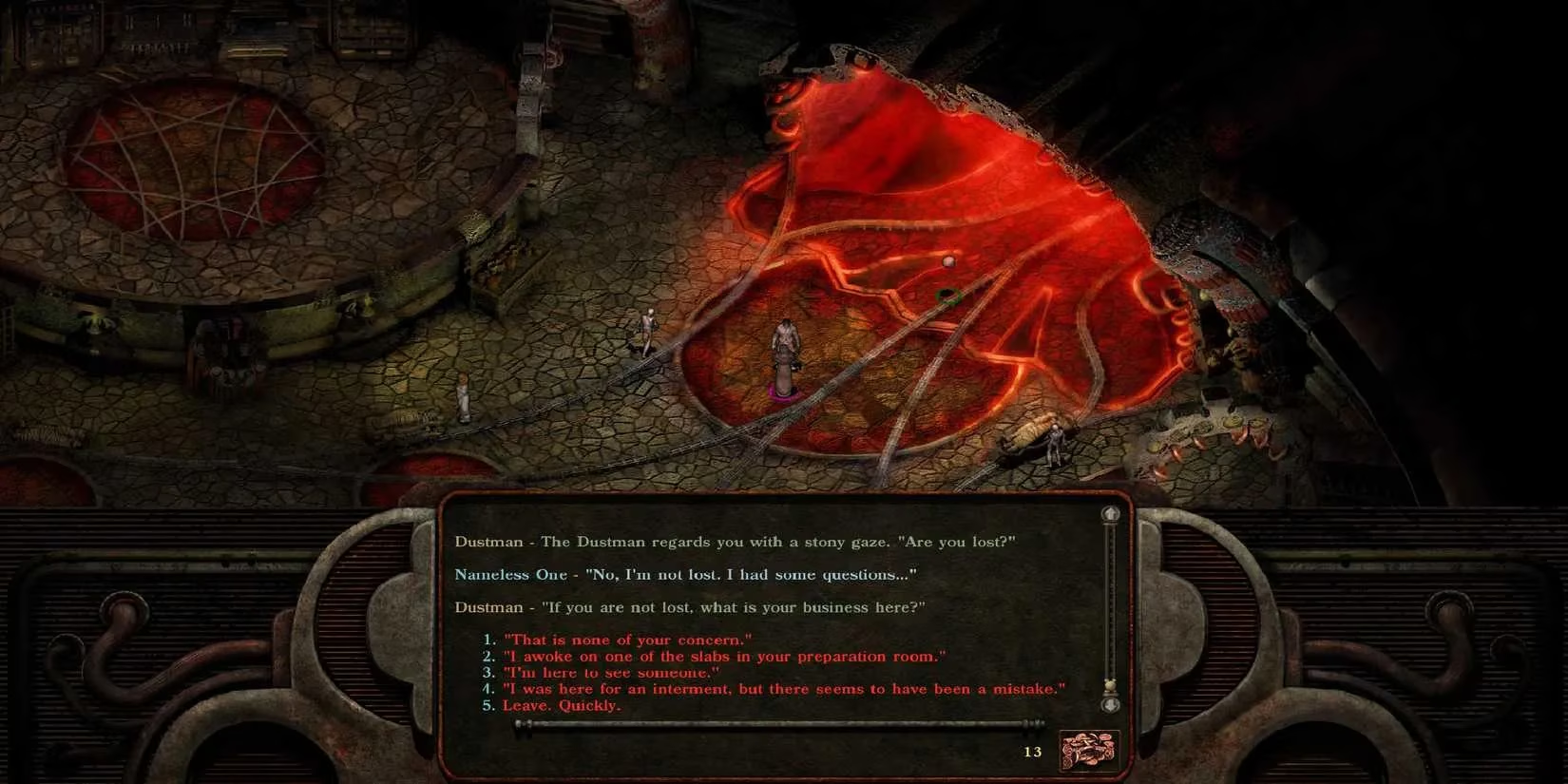
Planescape: Torment is less a game and more a philosophical inquiry where the player's stats are the vocabulary of the debate. Set in the bewildering, surreal city of Sigil, the game asks, "What can change the nature of a man?" Its replayability is born from the profound way character creation dictates narrative possibility. A high Intelligence and Wisdom score might allow The Nameless One to deconstruct reality with logic, convincing an NPC of his own non-existence until he winks out of being. A brute-force build would never glimpse such a moment. This design instills a powerful sense of narrative FOMO—the fear that behind every stat check lies a hidden, mind-bending encounter or a shard of truth about your immortal protagonist. To piece together the complete, fragmented mosaic of the story, one must walk the multiverse many times, each journey defined by a different aspect of the self: the sage, the warrior, the charlatan. It is a game that rewards intellectual curiosity with unique story beats, making every playthrough a fresh exploration of identity and metaphysics.
7. Mass Effect 3: The Heart's Echo
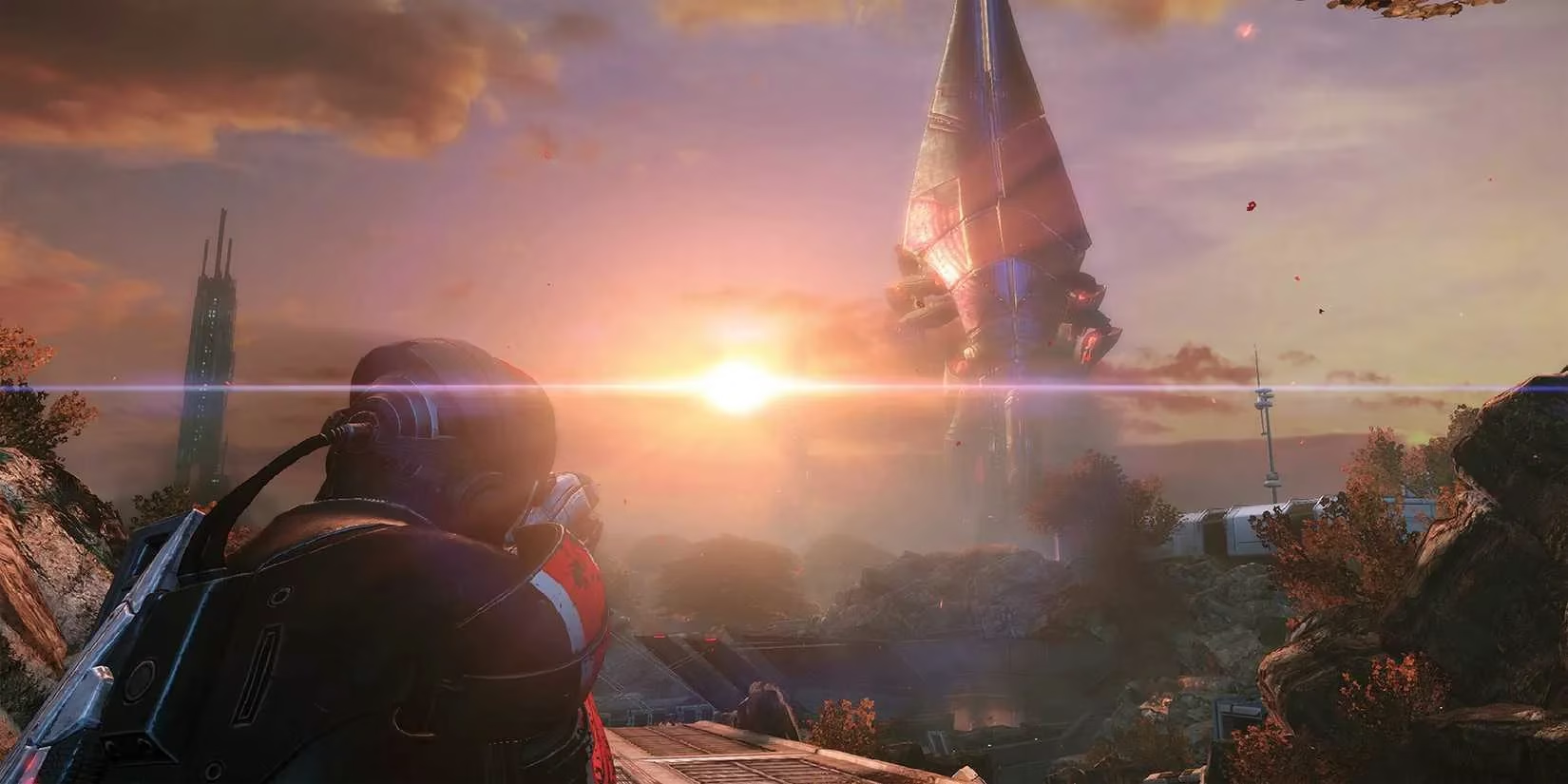
The Mass Effect trilogy is an epic of galactic proportions, but its final chapter, Mass Effect 3, achieves infinite replayability through an emotional resonance that transcends its branching choices. Yes, one can replay to ensure the survival of different crew members or experiment with biotic and tech powers, but for many, the pull is simpler and deeper: it is about coming home to friends. The game, especially when augmented by the legendary Citadel DLC, is a poignant farewell tour, a series of heartfelt moments with characters who have evolved over a decade of storytelling. The desire to replay is often not to romance someone new, but to share that same joke with Garrus at the presidium bar, to hear Tali's nervous excitement, to stand with Liara one more time against the Reaper tide. It is a game that understands that the most powerful anchor is not novelty, but familiarity and feeling—a vice grip on the player's heart that makes saying a final goodbye an impossibility.
6. Star Wars: Knights of the Old Republic: The Force of Connection
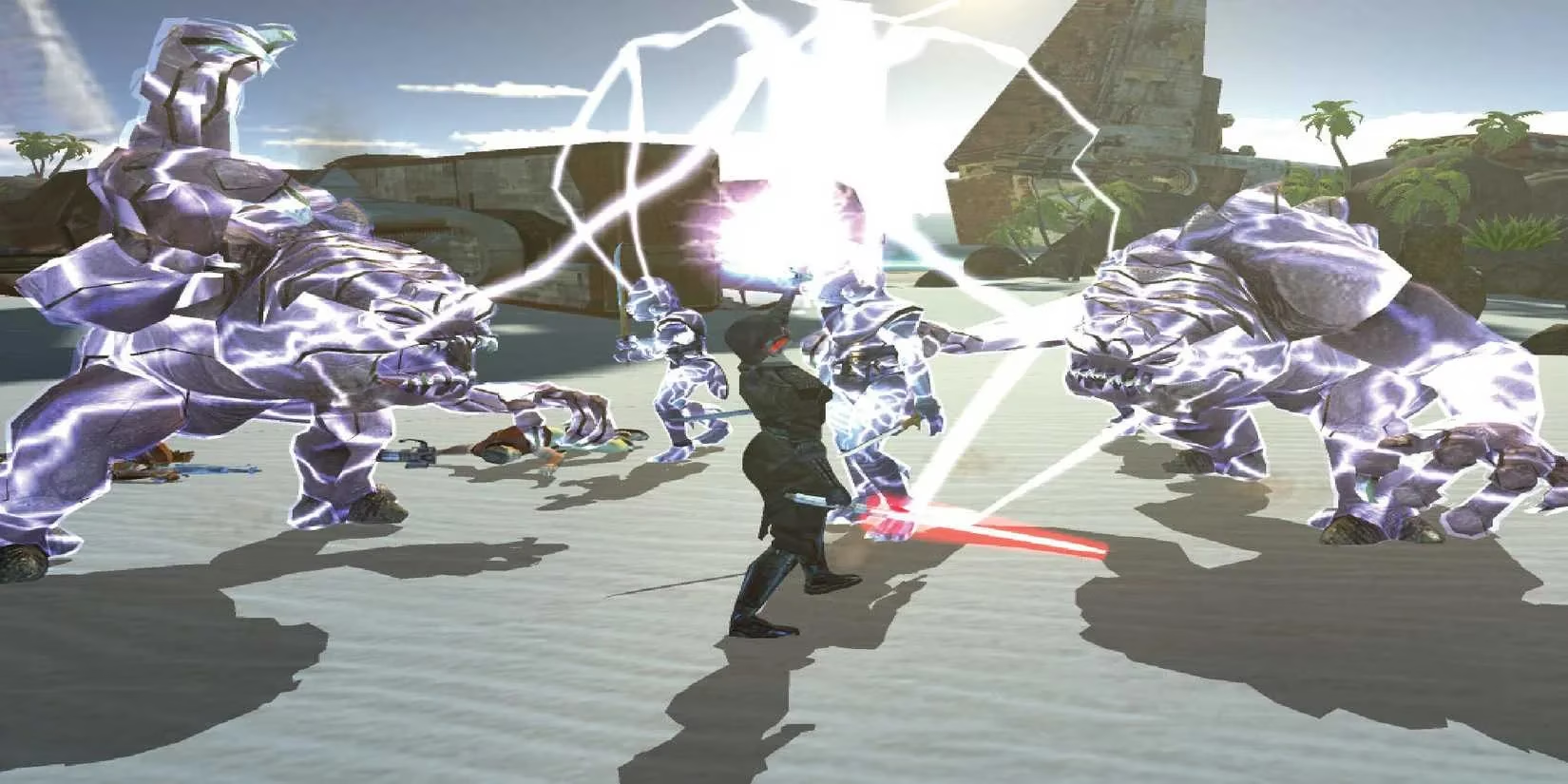
Two decades after its release, Star Wars: Knights of the Old Republic remains a lodestar for narrative-driven RPGs. Its replayability is a dual-edged lightsaber. One edge is the tangible, visceral morality system of the Force; choices push you toward the Light or Dark Side, physically altering your character's appearance and unlocking powerful, aligned abilities. The other, more potent edge is the profound camaraderie and conflict with your companions. The bonds forged with Bastila, Carth, and HK-47 are as compelling as any galactic struggle. Will you redeem the fallen, harden the cynical, or embrace the merciless logic of a droid? The personal stories woven into the Jedi and Sith conflict create a narrative gravity that pulls players back into its timeless tale. Mixing different allegiances (will you be a sneaky, Dark Side Scoundrel or a virtuous, Light Side Jedi Guardian?) with nuanced companion resolutions ensures the Kotor experience is forever ripe for rediscovery.
5. Dragon Age: Origins: The Foundation Stone
In an age of streamlined RPGs, Dragon Age: Origins stands as a monument to depth and consequence. Its visual fidelity may belong to a bygone era, but its narrative and systemic richness are timeless. The game's genius begins at character creation: your chosen race and class (a City Elf rogue, a Dalish Elf mage, a Dwarven noble warrior) are not mere cosmetics. They grant unique origin stories and, crucially, exclusive dialogue and quest options throughout the entire campaign. A human noble will navigate courtly politics with innate understanding, while an elven mage from the Circle Tower will share a secret language with fellow apostates. This design means the world reacts authentically to who you are. Combined with weighty decisions that reshape the fate of nations and companions, Origins offers not just a story, but a multitude of perspectives on the same cataclysmic event, each playthrough feeling uniquely personal and consequential.
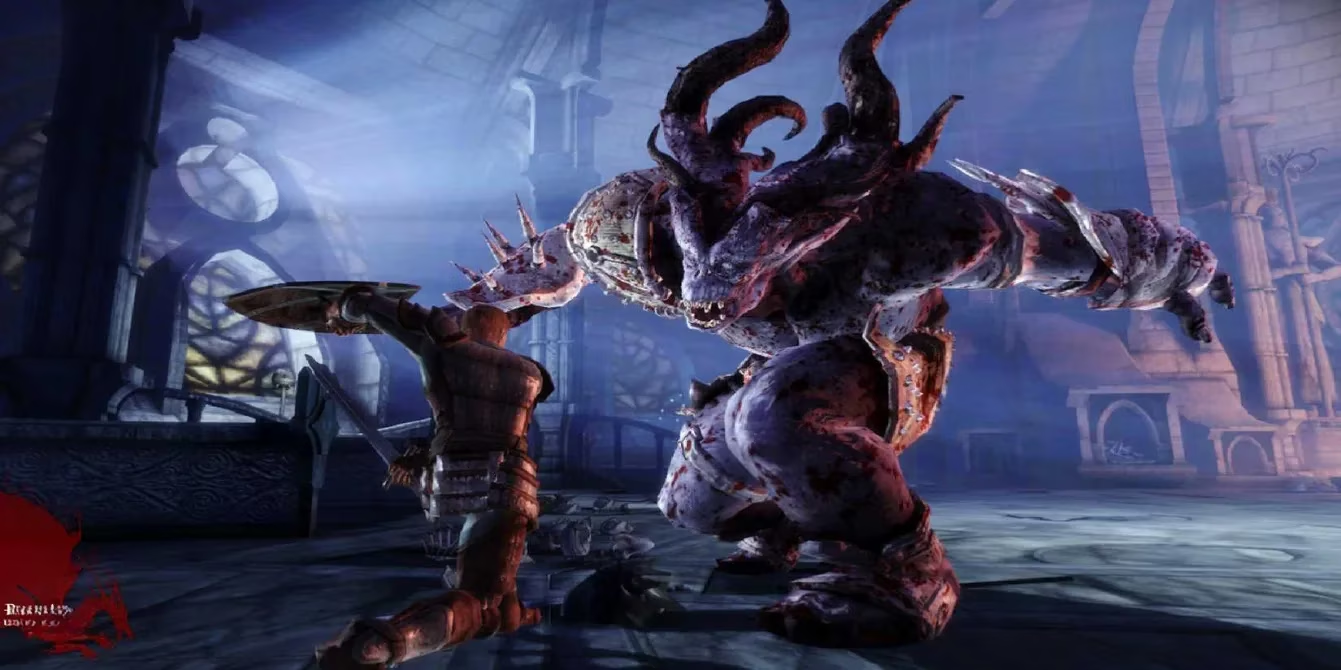
4. Fallout 4: The Wasteland's Whisper
Bethesda's post-apocalyptic Boston is a masterclass in environmental storytelling and factional intrigue. Fallout 4's replayability stems from its dense, discoverable world and the ideological crossroads it presents. Every ruined building, every abandoned terminal holds a micro-narrative—a skeleton in a bathtub, a haunting holotape—that can be missed a dozen times before being found. This encourages perpetual exploration. On a macro scale, the game forces players to choose a side in the ideological war between the militaristic Brotherhood of Steel, the synthetic-human Synths of the Institute, the revolutionary Minutemen, and the shadowy Railroad. Allying with one often means becoming an enemy of another, locking out entire questlines and endings. To witness the Commonwealth's fate through the lens of each faction is to play four radically different games. Coupled with the unique commentary and perks offered by different companions, the irradiated wasteland remains a place of endless, grim fascination.

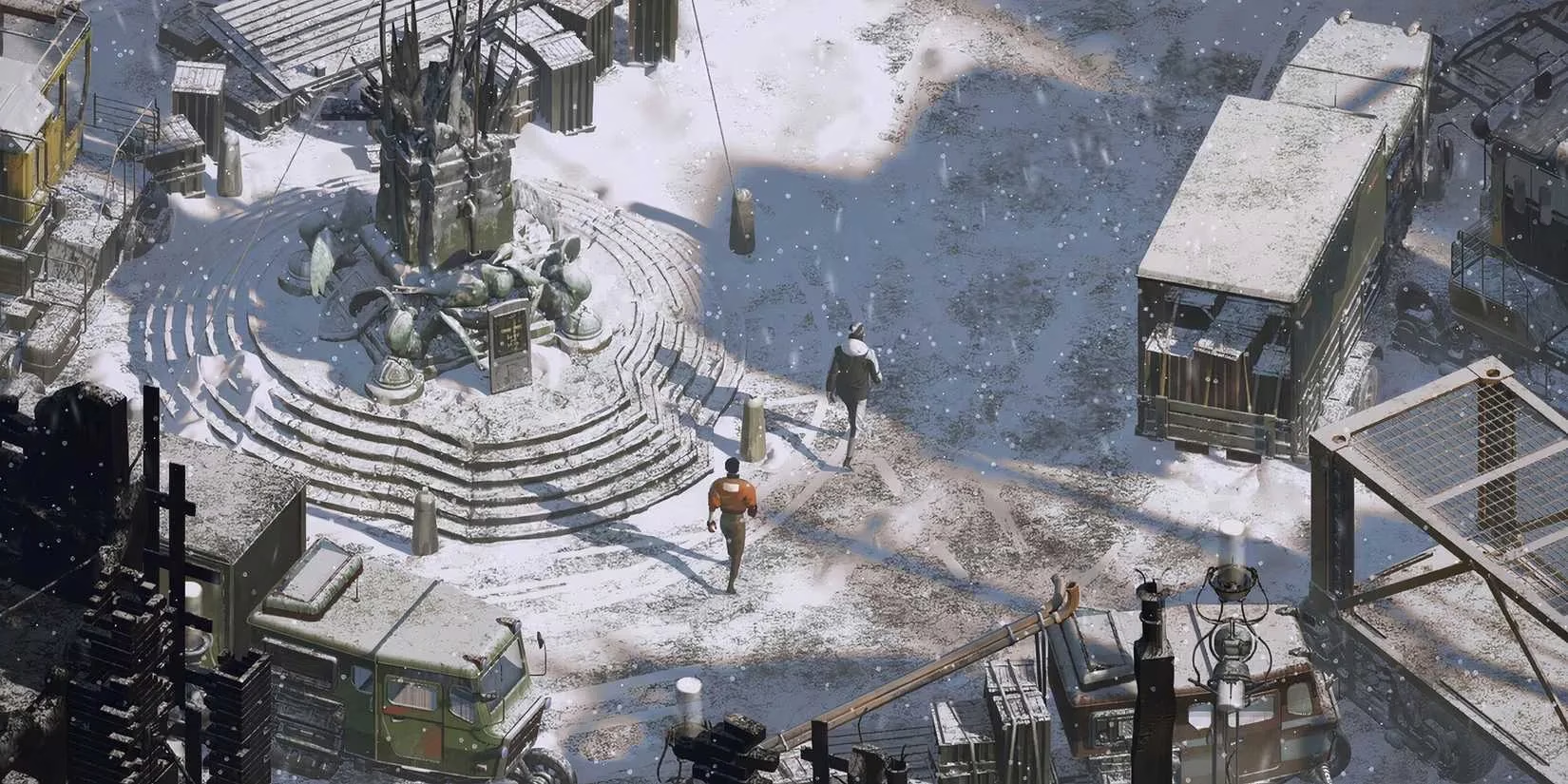
3. Disco Elysium: The Many Faces of Harry
Disco Elysium is a revolution in RPG design, where character stats are not combat modifiers but the very filters of reality. From the moment you awaken as the amnesiac, disaster-prone detective Harry Du Bois, your 24 internal skills—from Encyclopedia and Drama to Half-Light and Inland Empire—begin arguing, advising, and obscuring. This makes every playthrough a unique psychological profile. A "Sorry Cop" build, high in Esprit de Corps and Empathy, will experience a world of communal grief and connection. A "Apocalypse Cop" fueled by Electrochemistry and Shivers will plunge into a surreal, drug-fueled vision quest. Failing a skill check isn't a barrier; it's an alternative narrative path. Your approach to solving the central murder—through logic, brute force, surrealism, or sheer, pathetic empathy—defines not just the solution, but who Harry is and how the crumbling city of Revachol sees him. It is a game that demands to be lived multiple lives.
2. The Elder Scrolls V: Skyrim: The Infinite Province
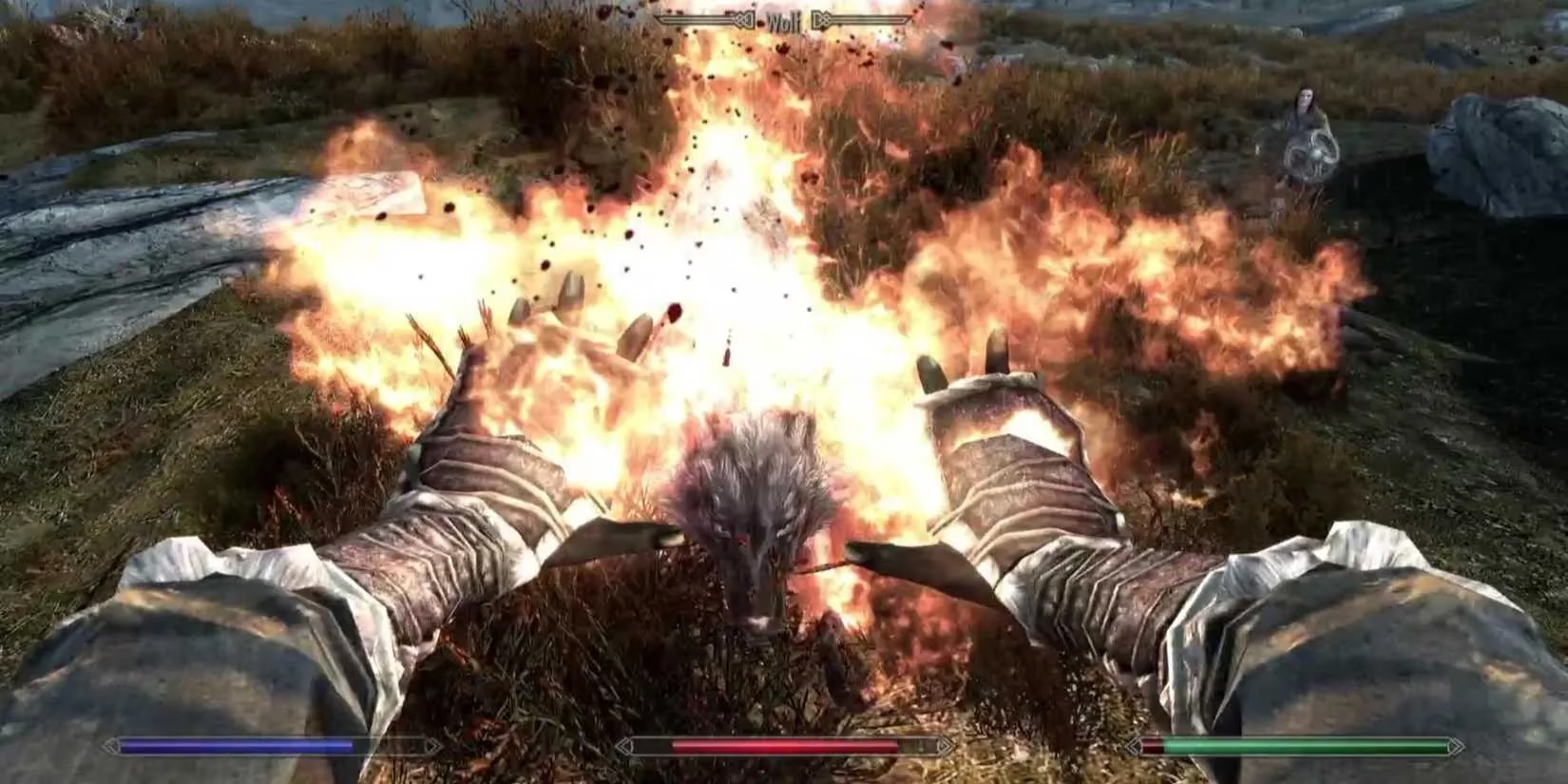
Skyrim is less a game to be replayed and more a world to be inhabited indefinitely. Its genius lies in its open-ended, systemic freedom. The main quest is almost an afterthought in a landscape where you can become a master thief in the shadowy Riften guild, a homeowner and bard in Solitude, a dedicated alchemist hunting for rare ingredients in the pine forests, or a werewolf haunting the moonlit tundra. The game's radiant quest system and lack of class restrictions foster pure role-playing emergence. Every mountain path promises a new dungeon, every NPC a potential unmarked quest. In 2026, bolstered by a decade of official re-releases and a modding community of staggering scope and creativity, Skyrim has transcended being a mere title. It is a platform for imagination, a digital canvas where players don't just follow a story—they author their own, season after season.
1. Baldur's Gate 3: The Dice of Destiny
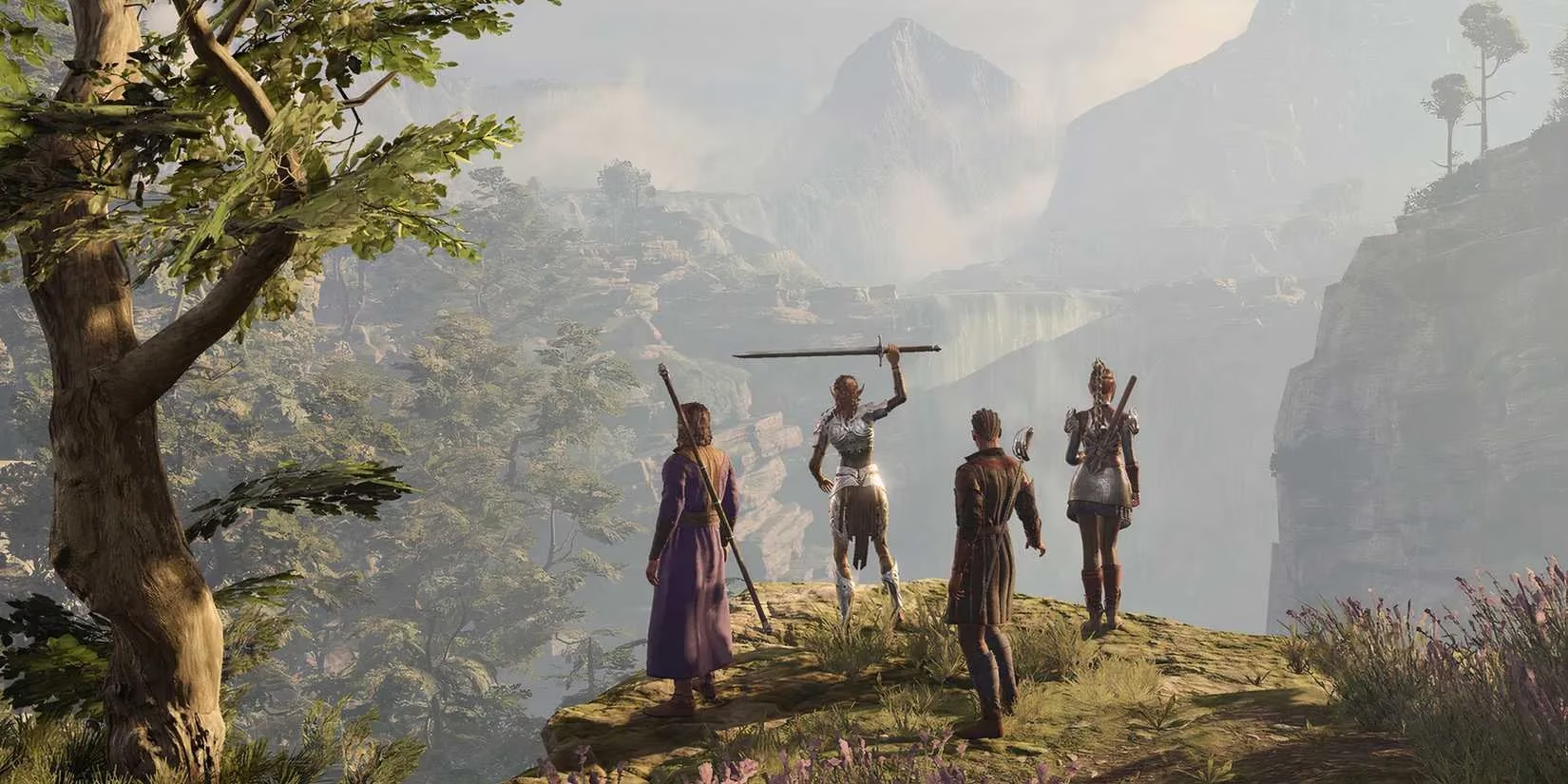
As of 2026, Baldur's Gate 3 has cemented itself as the modern zenith of infinitely replayable RPGs. It achieves this by marrying unparalleled narrative depth with astonishing systemic freedom. Every quest, from a petty squabble to a deicidal confrontation, can be approached through combat, stealth, diplomacy, or absurd, ingenious creativity (why fight a boss when you can fill its lair with explosive barrels?). The dice-roll mechanic injects a thrilling element of chance into every social and exploratory interaction, meaning even with the same intent, outcomes can diverge wildly. Narratively, the game is a web of interlocking choices with profound consequences: siding with different factions, resolving companion quests in opposing ways, or embracing illithid powers can lead to radically different endings and party compositions. The vibrant modding community only expands this universe further. Baldur's Gate 3 doesn't just offer a new story on a second playthrough; it offers a new world, shaped by the whims of chance and the weight of every whispered word and drawn blade.
The Timeless Appeal: A Summary of Endless Worlds
| Game | Core Replayability Driver | Key Mechanic/Feature |
|---|---|---|
| Tyranny | Consequential Faction & Path Choices | The Anarchy Path, Political Intrigue |
| The Witcher 3 | Atmospheric Immersion & World-Building | Living World, Gwent, Monster Contracts |
| Planescape: Torment | Stat-Dictated Narrative Branches | Philosophical Dialogue, Unique Skill Checks |
| Mass Effect 3 | Emotional Character Bonds | Citadel DLC, Companion Loyalty |
| Knights of the Old Republic | Force Morality & Companion Stories | Light/Dark Side System, Influential Party Members |
| Dragon Age: Origins | Race/Class Exclusive Content | Unique Origin Stories, Deep Lore Integration |
| Fallout 4 | Faction Warfare & Environmental Storytelling | Settlement Building, Ideological Choices |
| Disco Elysium | Internal Skill-Based Reality Perception | 24 Talking Skills, Psychological Role-Play |
| Skyrim | Systemic Open-World Freedom | Radiant Quests, Modding Community, No Class Restriction |
| Baldur's Gate 3 | Systemic Freedom & Dice-Roll Chance | D&D 5e Rules, Multifaceted Problem Solving, Deep Companion Arcs |
These realms endure because they understand that the greatest role-playing fantasy is not merely to witness a tale, but to live within one that is forever new. They are not games to be completed, but worlds to be revisited, like old books whose pages reveal new secrets with each reading. In them, the player finds not an end, but a perpetual beginning.